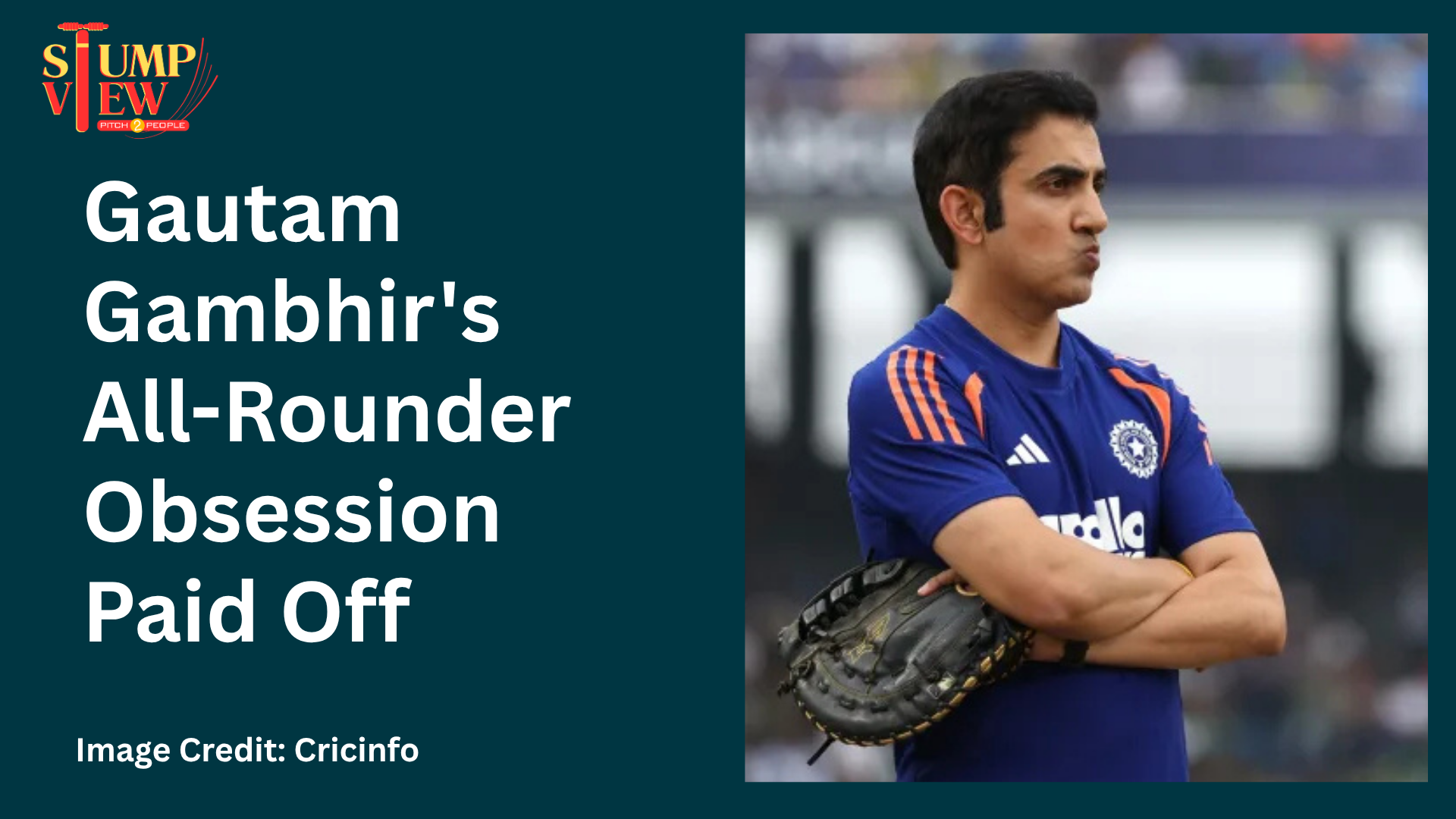
After a disappointing T20I series, India finally breathed a sigh of relief as they crossed the finish line in the 1st ODI against England at Edgbaston, winning by 6 wickets with 28 balls to spare. There was plenty of debate over India’s decision to leave out frontline wrist-spinner Kuldeep Yadav. However, Gautam Gambhir’s strategy of fielding an additional all-rounder paid off brilliantly as the visitors took a crucial 1-0 lead in the England vs India three-match ODI series.
India Had the Perfect Balance in the 1st ODI
With a combination of five specialist batters, three all-rounders, and three frontline bowlers, India struck the perfect balance despite finding themselves under pressure during the chase. Opting against a specialist spinner is always a gamble, but the all-rounders once again proved their value in the 50-over format by displaying exceptional game awareness at crucial moments.
Coach Gautam Gambhir’s obsession for playing three all-rounders—Axar Patel, Washington Sundar, and Shivam Dube—paid rich dividends, as all three made significant contributions to India’s victory in the first ODI.
How the All-Rounders Changed the Match
Popularly known as “Bapu,” Axar Patel starred with both bat and ball. He claimed four wickets to restrict England to 258 before producing a match-winning unbeaten 57* off 52 balls, earning the Player of the Match award in the England vs India, 1st ODI. More importantly, when India found themselves in trouble, needing 99 more runs for victory, Axar stitched together an unbeaten 102-run partnership with Washington Sundar to guide India home comfortably.
Washington Sundar once again justified Gautam Gambhir’s faith in him. The Indian coach sees Sundar as a versatile cricketer capable of performing multiple roles, and the 26-year-old Tamil Nadu all-rounder lived up to those expectations. Promoted up the order, Sundar played according to the situation, scoring a valuable unbeaten 52*. Earlier, he also bowled an economical spell, conceding just 13 runs in his four overs without taking a wicket.
Shivam Dube, meanwhile, received an opportunity after all-rounders Hardik Pandya, Nitish Kumar Reddy, and Harshit Rana were ruled out of the series due to injuries. Playing his first ODI after nearly two years, Dube made an immediate impact by dismissing Will Jacks. He induced an outside edge with a delivery that moved away slightly, while KL Rahul completed a stunning one-handed catch diving to his right.
Batting Depth Gives India a Huge Advantage
Like every successful coach, Gautam Gambhir has a clear philosophy. He prefers multi-skilled cricketers who provide additional batting depth and tactical flexibility. Since the top order cannot be expected to deliver in every match, having reliable all-rounders lower down the order significantly increases a team’s chances of winning.
That strategy was evident in the first ODI, where unbeaten half-centuries from Axar Patel and Washington Sundar proved instrumental in steering India to a well-deserved victory.
Extra Bowling Options Troubled England
Fielding two spinning all-rounders and one pace-bowling all-rounder in English conditions was undoubtedly a bold move. However, Gambhir’s strategy worked perfectly, as the three all-rounders combined to claim five wickets while also contributing 109 runs with the bat.
Modern-Day Cricket Demands Multi-Skilled Players
Almost every top international side now possesses a strong group of all-rounders, and both India and England showcased that depth in the first ODI, with batting extending all the way to No. 8.
England had seven bowling options but lacked the wicket-taking ability to break India’s crucial partnership. India, the No. 1-ranked ODI side, operated with six bowling options, three of whom were genuine all-rounders.
Not every all-rounder needs to score a century or claim a five-wicket haul. Even a quickfire 30 or 40 runs and two or three crucial wickets can completely change the course of a match. That is precisely why modern-day teams place so much emphasis on developing genuine all-rounders who provide the ideal balance.
What This Means for India’s ODI Future
With the ICC Cricket World Cup in Africa just 15 months away, India are likely to continue with this combination as they build towards the marquee tournament. Having multiple match-winning all-rounders is always a luxury.
Conditions in Africa are expected to favour pace, meaning India could field three or even four seamers alongside two spinners. The top five already appear settled, featuring Rohit Sharma, Shubman Gill, Virat Kohli, Shreyas Iyer, and KL Rahul.
Hardik Pandya and Mohammed Siraj will almost certainly return to the playing XI once fit, further strengthening the side.
One More Victory and India Will Seal the Series
The No. 1-ranked ODI side has moved one step closer to securing direct qualification for next year’s ICC Cricket World Cup after a convincing victory in the opening ODI.
For England, however, every ODI now carries significant importance. With the qualification cut-off date fast approaching, they must finish inside the top eight of the ICC ODI rankings to secure automatic qualification and avoid the World Cup Qualifiers.
Gautam Gambhir’s philosophy of fielding multiple all-rounders has already paid dividends, helping India win the ICC Champions Trophy 2025 and the ICC T20 World Cup 2026. He is likely to continue with the same approach as he builds the team for the ICC Cricket World Cup 2027.