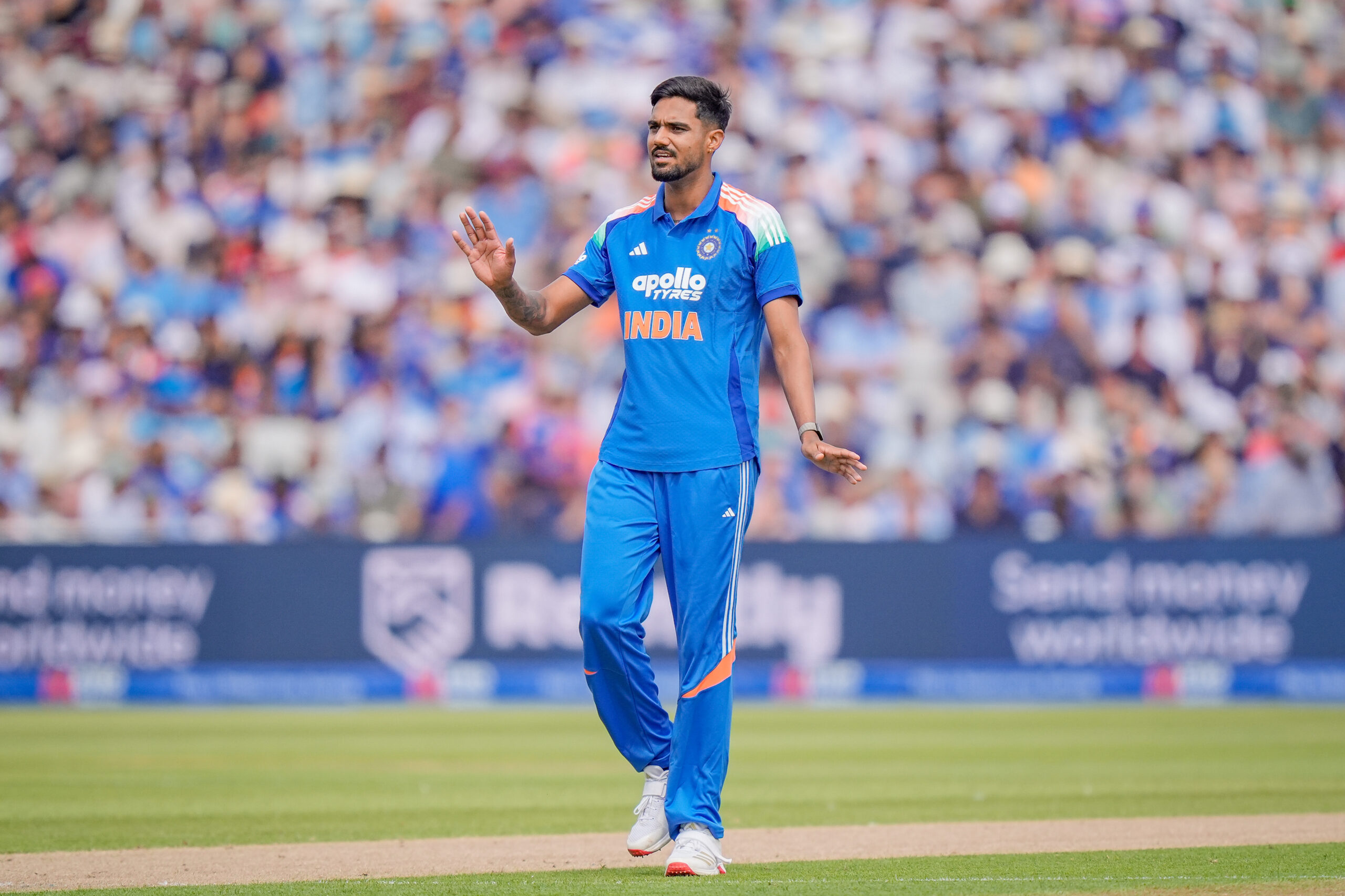
The question that might be running through your mind is this: how did relatively lesser-known bowlers such as Gurnoor Brar and Ashok Sharma earn their ODI and T20I debuts?
Yes, they have done well in the limited opportunities they have had in domestic cricket, but the selectors recognised their ability to bowl at high pace, hit hard lengths consistently, and regularly clock speeds close to 150 kph. As a result, they were fast-tracked into the national setup.
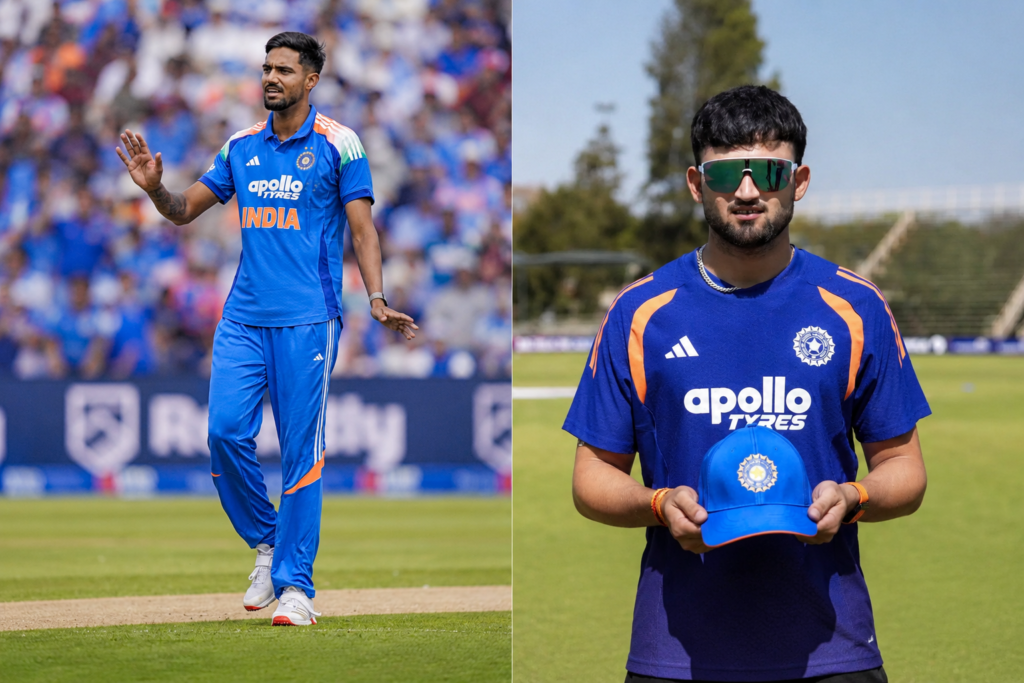
The same approach does not apply to batters. A player who can simply hit big sixes cannot be fast-tracked into the Indian team. Bowlers possessing a rare or exceptional skill set can reach the highest level much quicker, while batters are generally expected to prove themselves over a much longer period.
After analysing the recent trend of debutants across formats, it appears that the Indian men’s team is not actively looking for new batters anytime soon. With marquee events such as the ODI World Cup, T20 World Cup, and the Olympics scheduled over the next two years, the top order—particularly positions one to five—is almost locked in. Opportunities for new batters are therefore limited, and the selectors are unlikely to introduce fresh faces unless someone possesses an extraordinary skill set or an injury creates an opening.
Batters Face a Longer Road to the Indian Team
The chances of a new batter breaking into the current Indian team across formats are slim. It takes years of scoring consistently in domestic cricket and backing it up with strong performances in the Indian Premier League (IPL) to earn a place in the white-ball setup.
A player aspiring to play only Test cricket generally needs to score at least 1,000 runs in a domestic season to come into national reckoning. More importantly, that form must be sustained for one or two seasons. Players who meet those standards are often rewarded with India A opportunities, overseas tours, and selections for tournaments such as the Duleep Trophy and the Irani Trophy before eventually earning a Test call-up.
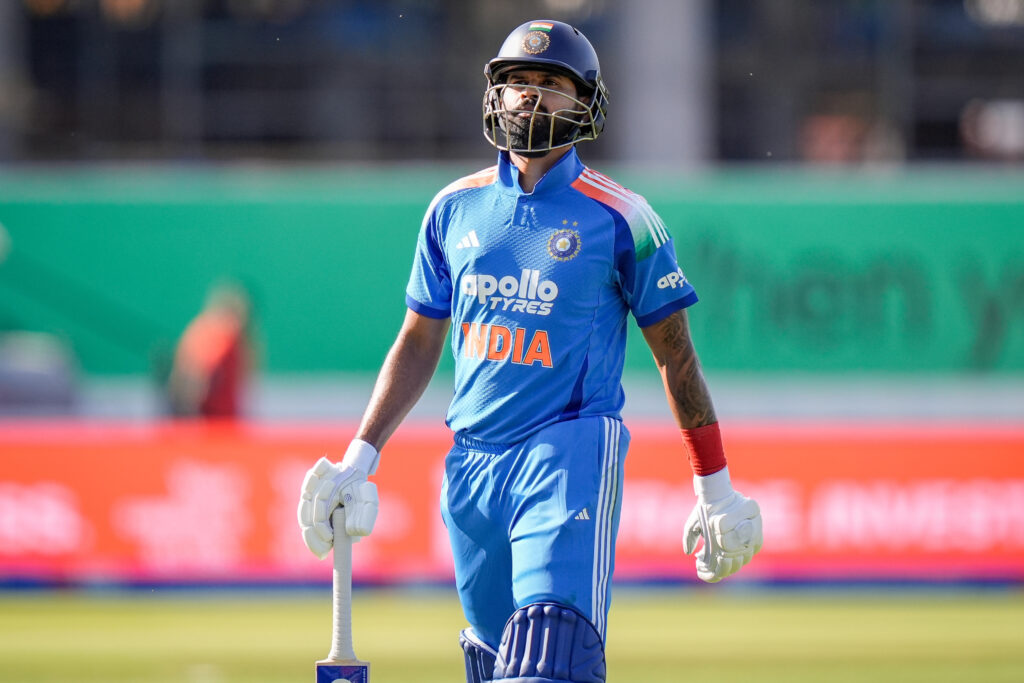
The current Indian batting unit across Tests, ODIs, and T20Is is well settled, with the top five packed with talented and established players. Even those currently out of the team due to poor form or other reasons are waiting for another opportunity. As a result, it is extremely difficult—though not impossible—for a new batter to begin an international career in the current setup, given the abundance of talent already available.
https://stumpview.com/overshadowed-but-outstanding-new-zealands-seamers-deserve-more-hype/
The first criterion for any batter is simple: he must be exceptionally talented and already established in domestic cricket or the IPL before receiving a call-up from the national selectors. Realistically, such opportunities are rare in the current setup.
The case of Vaibhav Sooryavanshi is entirely different. At just 15 years of age, he made his T20I debut against England after announcing himself on the biggest stage in the IPL, where he took apart some of the world’s best bowlers. He has also become a crowd-puller, with many households tuning in just to watch him bat. A similar phenomenon was seen with Sachin Tendulkar, who took the sport to an entirely different level in India.
Seamers Dominate the List of Latest Debutants
The role of bowlers is crucial to the success of any team, especially in multi-nation tournaments. A strong squad requires quality seamers and spinners alike.
India’s batting department appears largely settled, allowing the selectors to use bilateral series to test new fast bowlers. We recently saw Arshdeep Singh, Prasidh Krishna, Gurnoor Brar, and Prince Yadav form India’s pace attack for the deciding ODI against England at Lord’s, despite none of them having played more than 30 ODIs. It clearly shows that the selectors are keen to introduce fresh bowling talent and build a strong pipeline ahead of major ICC tournaments.
| ODIs | T20Is | Test | |
| 1 | Prince Yadav | Ashok Sharma | Manav Suthar |
| 2 | Gurnoor Brar | Vaibhav Sooryavanshi | Anshul Kamboj |
| 3 | Harsh Dubey | Suryansh Shedge | Sai Sudharsan |
| 4 | Nitish Kumar Reddy | Prince Yadav | Harshit Rana |
| 5 | Varun Chakravarthy | Harshit Rana | Nitish Kumar Reddy |
| 6 | Harshit Rana | Ramandeep Singh | Devdutt Padikkal |
| 7 | Sai Sudharsan | Mayank Yadav | Akash Deep |
| 8 | Riyan Parag | Nitish Kumar Reddy | Dhruv Jurel |
| 9 | Dhruv Jurel | Tushar Deshpande | Sarfaraz Khan |
| 10 | Abhishek Sharma | Sai Sudharsan | Rajat Patidar |
A look at the latest debutants across formats shows that fast bowlers make up a significant share of the list.
In ODIs, three of the last 10 debutants—Prince Yadav, Gurnoor Brar, and Harshit Rana (now viewed as a bowling all-rounder)—are genuine fast bowlers. Nitish Kumar Reddy is primarily a batting all-rounder who can contribute with seam bowling, while Harsh Dubey, who made his debut against Afghanistan last month, adds value with both his left-arm spin and lower-order batting. Rajasthan Royals captain Riyan Parag is also primarily a batter who can contribute with the ball. Mystery spinner Varun Chakravarthy, who was picked for the 2025 Champions Trophy, has not featured in the format since India’s victory over New Zealand in the final.
In T20Is, only two genuine batters—Vaibhav Sooryavanshi and Sai Sudharsan—feature among the latest debutants, while the remaining eight are either genuine fast bowlers or seam-bowling all-rounders. The latest addition is Ashok Sharma, who made his debut against Zimbabwe on Thursday.
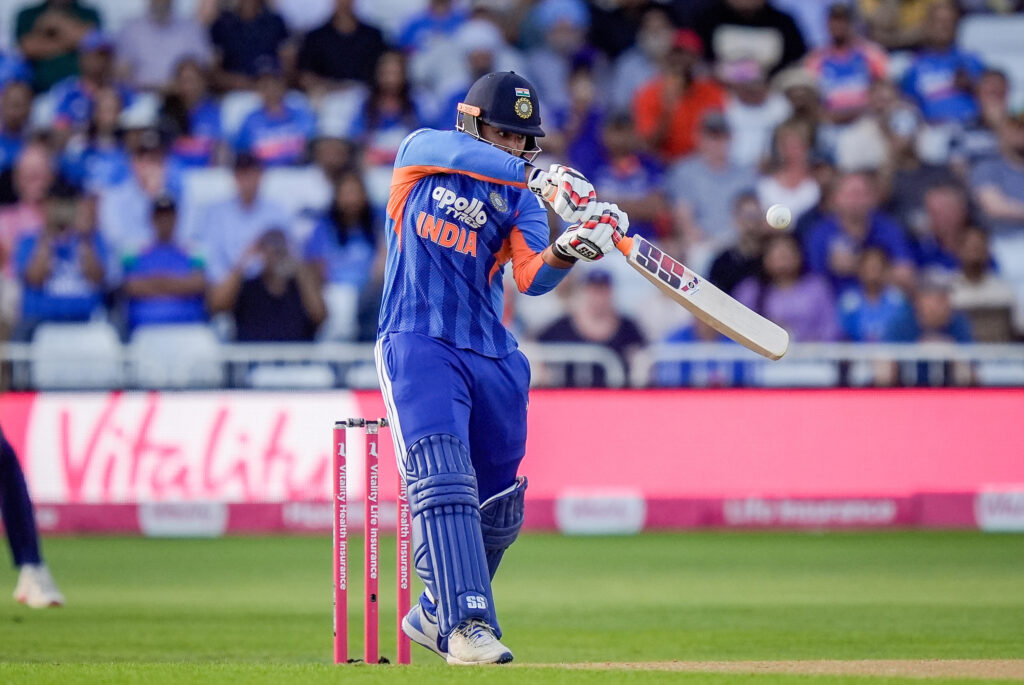
Handing debuts has become a regular feature in T20Is, as the selectors continue to experiment with players who have impressed in the IPL and domestic cricket. If you can consistently bowl close to 150 kph or possess a mystery skill that troubles batters, you are very much on the selectors’ radar.
Test cricket, however, follows a different approach. The selectors are far less inclined to experiment with the pace attack and generally field their strongest available bowling unit unless injuries or playing conditions demand a change.
With Jasprit Bumrah, Mohammed Siraj, Akash Deep, Prasidh Krishna, and Harshit Rana already in the setup, there is little immediate need to introduce another fast bowler. This perhaps explains why Aquib Nabi, who played a pivotal role in Jammu & Kashmir’s maiden Ranji Trophy triumph earlier this year and finished as the tournament’s leading wicket-taker with 60 wickets, was overlooked for national selection.
The selectors have adopted different approaches across formats when it comes to picking seamers. In ODIs and T20Is, they are constantly searching for fresh faces to strengthen India’s pace reserves. In Test cricket, however, a player is still expected to grind through the domestic circuit for several years before earning a place in the national team.