India vs Japan 2026: Why a Historic T20I Matters Beyond the Scorecard
By
Mahadev Prasad
•
When India Meets Japan, the Score May Not Be the Most Important Number
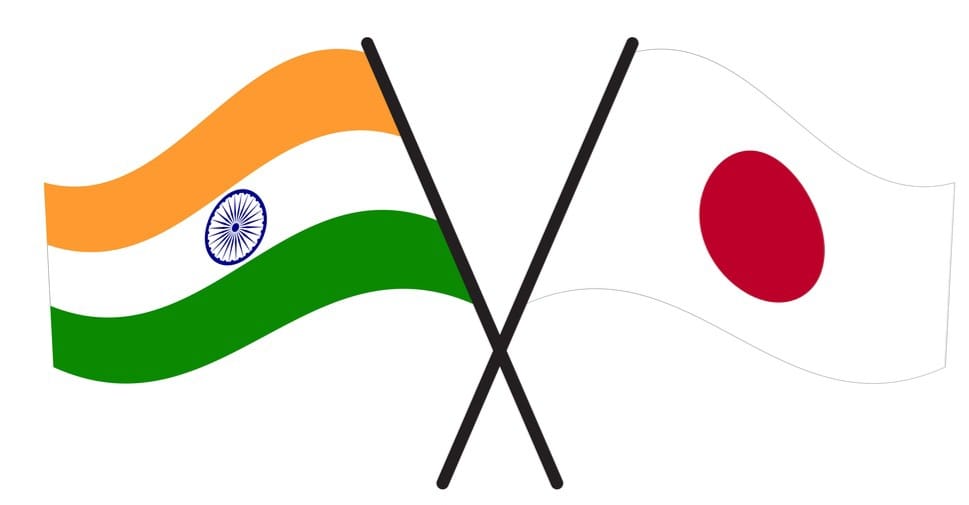
India and Japan will meet in men’s international cricket for the first time on September 22, 2026.
On paper, it looks like a match between a global cricket powerhouse and a developing cricket nation.
But reducing the contest to that description misses the bigger story.
The match is part of a much larger attempt to take cricket into new territories.
India, the reigning Men’s T20 World Cup champions, will face Japan at the Sano International Cricket Ground in Tochigi Prefecture. Both teams will subsequently be involved in the men’s cricket competition at the 2026 Asian Games.
For Japan, this is an opportunity.
For India, it is preparation.
For cricket, it is a test of how far the sport can travel.
A First Meeting With Historical Weight
India and Japan have never played a men’s international cricket match against each other.
That alone makes the fixture unusual.
International cricket has traditionally been concentrated around a relatively small group of countries.
But the sport’s long-term growth depends on expanding beyond those established markets.
Japan presents a fascinating case.
It has a strong sporting culture, world-class infrastructure and an enormous potential audience.
What it does not yet have is cricket’s centuries-old sporting tradition.
That makes matches such as this particularly important.
The Japan Cricket Association has described the fixture as a landmark occasion, while the ICC has positioned it within cricket’s broader expansion into East Asia.
Why India Are Playing Japan
For India, the match is also strategically useful.
India are scheduled to enter the men’s Asian Games competition from the quarter-final stage, while Japan will play in the group stage.
The one-off T20I therefore functions as preparation before the Asian Games.
It allows India’s players to adjust to the environment and conditions while giving the wider squad an opportunity to play in Japan.
But there is another benefit.
India’s presence can help create attention around cricket in a country where the sport is still fighting for mainstream recognition.
The Asian Games Could Change the Conversation
The 2026 Asian Games in Aichi-Nagoya will feature men’s and women’s cricket.
The men’s competition runs from September 24 to October 3.
Cricket’s presence at multi-sport events is important because it introduces the sport to audiences who may not normally follow international cricket.
That is especially relevant in countries where cricket is not traditionally one of the dominant sports.
Japan’s cricket journey therefore isn’t simply about producing an international team.
It is about creating an ecosystem.
Schools.
Clubs.
Coaches.
Local competitions.
Women and girls.
Youth cricket.
And eventually, a fan base.
What India Can Give Japan Without Giving Away the Game
There is an interesting dynamic in this match.
Japan do not need the result to prove that cricket belongs there.
Playing against India provides something arguably more valuable: exposure.
Japanese players will experience the intensity of an international match against some of the world’s most recognisable cricketers.
Young players watching the match may see a pathway they had never considered.
That is how sports cultures grow.
Not overnight.
But through repeated moments that make the sport visible.
Japan’s Cricket Story Is Bigger Than One Match
Japan’s cricket development has accelerated in recent years, but the country’s cricket history is not new.
The challenge has been converting participation into a sustainable high-performance system.
The arrival of international cricket at a higher level creates another layer of visibility.
And the Asian Games provide an even larger stage.
The most important outcome from India vs Japan may therefore happen away from the pitch.
A child watching the match may become interested in cricket.
A school may start a cricket programme.
A sponsor may become curious.
A local club may receive more attention.
A Japanese player may decide that international cricket is an achievable ambition.
— 一般社団法人 日本クリケット協会| JCA Japan Cricket Association (@CricketJapan) September 21, 2026
What does India playing Japan mean for the future of cricket in East Asia?
Cricket Is Becoming a More Global Game
The traditional cricket map is changing.
The sport remains dominated commercially and competitively by established nations, but international expansion increasingly involves countries outside cricket’s traditional core.
India’s match against Japan is a small but highly visible example of that transition.
The result will matter to both teams.
But the story extends much further.
If cricket wants to become a genuinely global sport, it needs more than World Cups.
It needs first meetings.
New rivalries.
New players.
New audiences.
And new cricketing countries.
On September 22, India and Japan will provide one of those moments.
And sometimes, the most important cricket story isn’t the team that wins.
It is the country that starts believing it can play.